Drive through the gate at The Bridges on a Saturday each spring and you might expect empty cart paths and a scattering of golfers working the back nine. Instead you will likely find the clubhouse lawn set up for a Spring Carnival, a tennis clinic wrapping up on one of the five lighted courts, and a line of families waiting for an Easter brunch seating. The golf course, often ranked among the top courses in California, is what gets a listing photo. It is not what fills a resident's week.
That is the part outsiders miss when they talk about The Bridges. They describe it as a golf course with houses wrapped around it. Residents know it the other way around: the golf course is the entry test, and the clubhouse calendar is the actual neighborhood.
A Course Built to Be Crossed, Not Just Played
The golf itself deserves the reputation. Robert Trent Jones II designed the 18-hole, par-71 layout so that seven bridges carry play across canyons and the Escondido Creek ravine, the same crossings that gave the club's own tournament, the Battle of the Bridges, its name. Golf Digest describes the course as a contrast of sculpted architecture against the property's rugged ridges and canyons, with the front nine circling the development's more compact homes and the back nine flaring out into open country under the larger estates.
None of that is decoration. The ravine crossings are the reason players describe the back nine as the part that stays with them. But a golf course, however well designed, only occupies the hours someone chooses to play it. What happens on the other six days is the part that shapes daily life here, and that is decided by the clubhouse.
Members Compare It to Tuscany, Not Torrey Pines
Ask a longtime member what The Bridges actually feels like and the comparison rarely lands on nearby San Diego golf. In a profile from LINKS Magazine, putter craftsman Scotty Cameron, a club member, described the feel as timeless and said that despite being close to the coast, being inside the gates makes you feel as though you are in Italy or Napa Valley. Another member, quoted in the same piece, said she and her husband had been content belonging to a different private club up the coast until they looked out from the 10th tee at the natural plantings and the clubhouse behind the final green and decided, on the spot, to join.
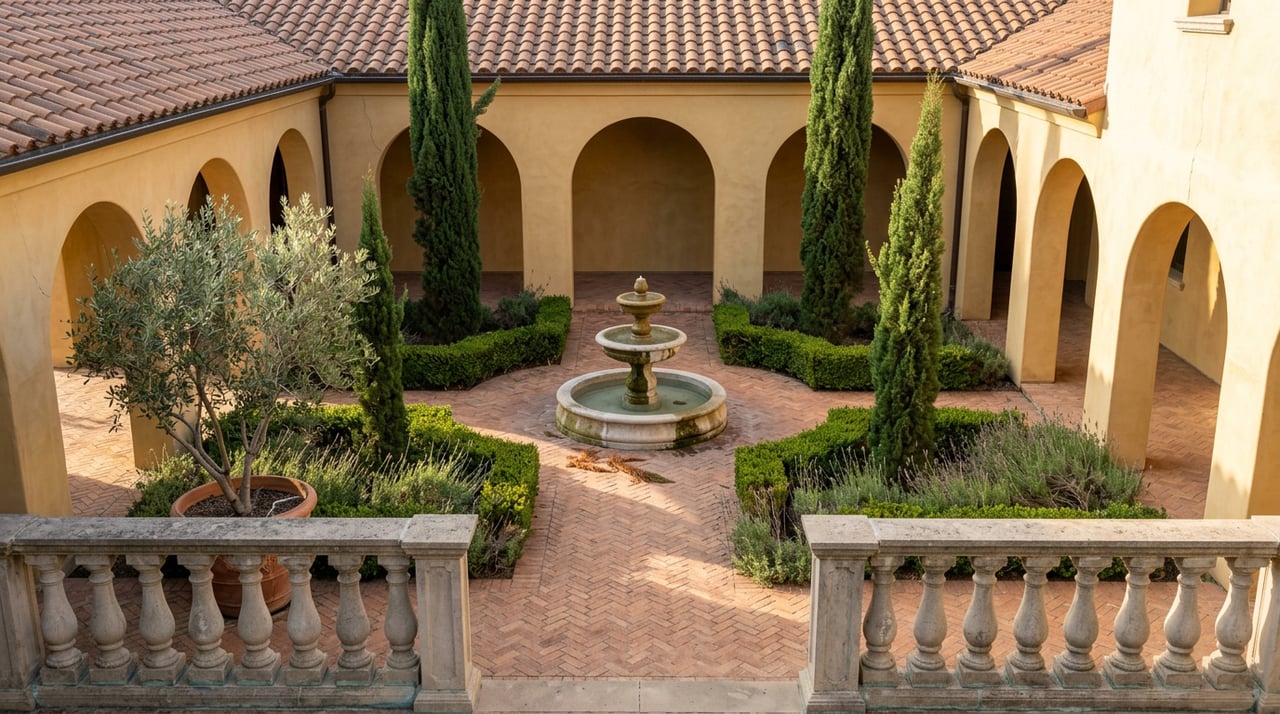
That reaction is not accidental. The club's 36,000-square-foot Tuscan-style clubhouse and its award-winning grounds were built to produce exactly that sense of having left the neighborhood behind without leaving the neighborhood. It is a small design trick with a large social effect. When the clubhouse itself reads as a destination rather than a facility, residents treat a Tuesday dinner reservation the way they might treat a night out somewhere else entirely, except the drive home is three minutes.
A Roster Small Enough That Staff Use Your First Name
The other piece that outsiders underestimate is scale. In a profile published this spring, LINKS Magazine put current membership at roughly 300, with about 250 holding full playing privileges. That is a small number for a club with a 36,000-square-foot clubhouse, a five-acre tennis and recreation center, and a dedicated golf academy, the Richard C. Helmstetter Performance Centre.
Small rosters change the texture of a place in ways that show up in the reviews as much as the amenity list. One golfer's account on GolfPass described staff greeting members by name every time they see them, and called the club somewhat hidden away, deep in Rancho Santa Fe, in a way that made arriving feel like pulling up to a private estate rather than checking into a facility. That is a different experience than a larger club where the pro shop staff rotates faster than the membership can learn names. At The Bridges, the smallness is the point. It is closer to a village that happens to have a golf course than a golf course that happens to have neighbors.
What Actually Fills the Calendar
The club's own event programming tells the clearer story about what a year looks like here. Recent seasons have included:
- A Spring Carnival on the clubhouse grounds
- Tennis and Fun Camps for kids during school breaks
- An Easter Brunch seating at the clubhouse
- A Women's Golf Guest Day
- Regular lessons and clinics through the Helmstetter Performance Centre
None of that requires a tee time. A family with young kids can build a full spring around the carnival and the camps without ever booking the course. A member who plays twice a month can still know the staff, the other families, and the rhythm of the club through brunches and guest days. The golf course anchors the property. The calendar is what actually organizes a resident's relationship to the place.
The Practice Ground That Doubles as a Quiet Corner
The club maintains five separate practice facilities, including a dedicated warm-up area adjacent to the clubhouse. LINKS Magazine has noted that Phil Mickelson, who lives nearby and considers The Bridges his home course, uses that short-game area regularly, in part because the layout gives him room to work without drawing a crowd. The detail matters less as name-dropping and more as evidence of intent. The practice grounds were designed to give members privacy and repetition, not just a place to warm up before a round. That is the same logic behind the tennis center, the fitness facility, and the clubhouse itself: each piece is built for daily, ordinary use rather than occasional showcasing.
The Real Argument for Living Here
Put the pieces together and the case for The Bridges stops being about a golf ranking and starts being about what a small, well-run club calendar does to a neighborhood. Three hundred members is few enough that the staff remembers your name. A Tuscan-style clubhouse and award-winning grounds are deliberate enough that members compare the feel to Italy rather than to golf destinations twenty minutes away. And a full slate of seasonal programming, carnivals, camps, brunches, guest days, means the golf course can sit quiet on a given weekend without the neighborhood feeling any less alive.
That is the version of The Bridges that does not show up in a course review or a real estate listing. It shows up when you are standing on the clubhouse lawn in April, watching a Spring Carnival unfold around you, and realizing the fairways are the least busy part of the property that day.
If you are curious what life actually looks like from inside those gates, or you are weighing The Bridges against another North County community, Barry Estates knows this neighborhood from the inside. Schedule a Private Consultation to talk through what fits your own version of a week here.